Customs Passages Carnet (CPD)
The Vehicle Passport to the World
In an era where international travel, tourism, and exploration have become more accessible than ever, private vehicles offer a unique way to discover the world with freedom and independence. However, crossing international borders with a vehicle requires compliance with various customs regulations. This is where the Customs Passages Carnet (CPD) plays a vital role as one of the most important international documents facilitating the temporary importation of vehicles and simplifying border procedures.
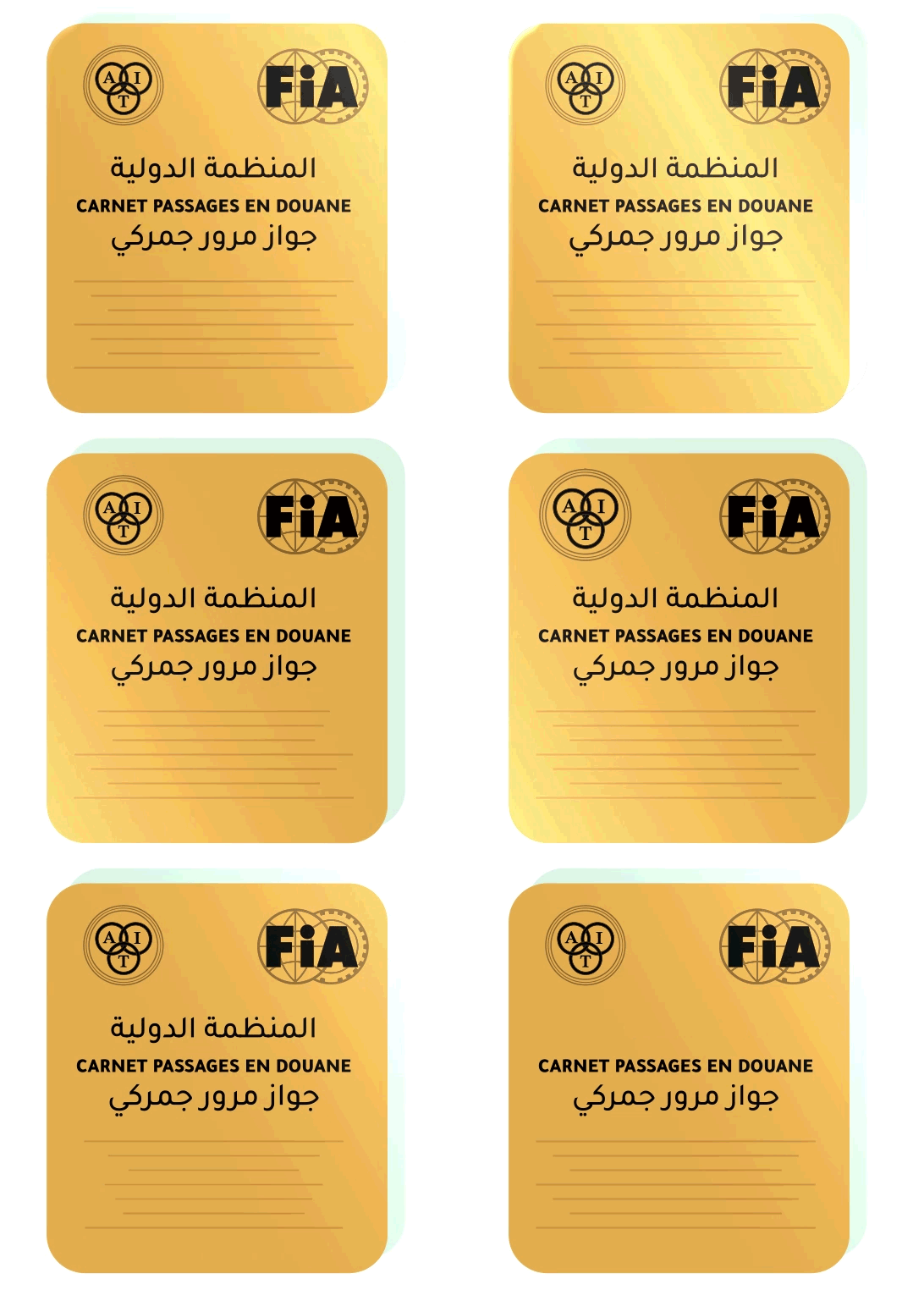
The Carnet de Passages en Douane (CPD) is an internationally recognized customs document that allows the temporary importation of vehicles into participating countries without the need to pay customs duties and taxes at the border, provided that the vehicle is re-exported within the period specified by the regulations of the host country.
Often referred to as the “Vehicle Passport,” the CPD contains essential information about both the vehicle and its owner. It serves as proof of the vehicle’s legal status when entering and leaving countries that operate under the Carnet system. In addition, it eliminates the need for travelers to provide separate cash deposits or financial guarantees at each border crossing, saving time and making international travel significantly more convenient.
The importance of the CPD lies in its key role in supporting international overland tourism, adventure travel, and cross-border expeditions. Thousands of travelers rely on the Carnet each year when undertaking journeys across multiple countries and continents. It is also required by several countries as a condition for the temporary importation of foreign vehicles.
The CPD system is based on a solid international legal framework, including relevant United Nations conventions governing the temporary admission of vehicles, as well as the Istanbul Convention on Temporary Admission. Around the world, authorized national automobile and touring organizations affiliated with international networks issue and guarantee CPDs, ensuring the reliability, credibility, and global acceptance of the system.
As international mobility continues to evolve, the CPD system is undergoing ongoing modernization and digital transformation aimed at enhancing efficiency, accelerating procedures, and improving transparency and security for travelers and customs authorities alike.
Your Vehicle’s Passport to Unlimited Journeys
The Customs Passages Carnet is far more than an administrative document. It is an essential travel companion for anyone wishing to explore the world with their own vehicle. By facilitating international mobility and supporting organized overland tourism, the CPD serves as a bridge between countries and cultures—truly earning its reputation as the “Passport for Vehicles” that opens the door to limitless adventures.
Overview of the Vienna Conventions on Private Vehicles (1954) and Commercial Vehicles (1956)
The 1954 and 1956 Conventions are among the most significant international agreements governing the temporary admission of vehicles across borders without the payment of customs duties and local taxes. Together, they laid the legal foundation for the development of the Carnet de Passages en Douane (CPD) system, which continues to facilitate international vehicle travel in many countries today.
First: The 1954 Convention
Customs Convention on the Temporary Importation of Private Road Vehicles
⦁ Signed on 4 June 1954 under the auspices of the United Nations.
⦁ Entered into force on 15 December 1957.
⦁ Designed to facilitate the movement of tourists and travelers crossing international borders with their private vehicles.
⦁ Allows the temporary importation of vehicles without payment of customs duties and taxes, provided that the vehicle is re-exported within the prescribed period.
⦁ Recognized the use of international guarantee systems, including the Carnet de Passages en Douane (CPD), to ensure that vehicles are not permanently imported into the host country.
Second: The 1956 Convention
Customs Convention on the Temporary Importation of Commercial Road Vehicles
⦁ Concluded in 1956 as a complement to the 1954 Convention.
⦁ Focused on trucks, buses, and vehicles used for the commercial transport of goods and passengers.
⦁ Aimed to facilitate international trade and cross-border road transport.
⦁ Granted temporary customs duty exemptions for commercial vehicles engaged in international transport operations, subject to specific conditions and guarantees.
Importance of the Conventions
⦁ Contributed to the removal of customs barriers affecting international travel and transport.
⦁ Established the legal framework for the Carnet de Passages en Douane (CPD/Tryptique) system.
⦁ Supported the growth of international tourism, trade, and cross-border road transportation.
⦁ Served as key reference instruments for the development of modern international customs and transport conventions.

 Head Office :
0537366641
Head Office :
0537366641




 Contact




 Home /